
Understanding Post-Tension Foundations: Benefits and Applications
Imagine a foundation that not just supports a structure but strengthens it against the forces of nature. Welcome to the world of post-tension foundations, a marvel of engineering that’s reshaping how we build the future.
What Are Post-Tension Foundations?
At its core, a post-tension foundation uses high-strength steel tendons that are stretched and then anchored into the concrete, providing significant strength to the structure.
This process, known as post-tensioning, turns the concrete into an active structure that actively resists loads, rather than passively supporting them.
It’s a fascinating blend of physics and engineering that addresses some of the common concerns in traditional concrete foundations, like cracking and settling.
The Science Behind Post-Tensioning
The science underpinning post-tensioning is all about pre-stressing the concrete to combat tensile forces.
Concrete, while excellent at handling compression, fares poorly under tension.
Introducing steel cables, known as tendons, which are tightened after the concrete has set, introduces a compressive force.
This pre-compression equips the slab to handle the tensile stresses it encounters, effectively increasing the component’s load-carrying capacity and enhancing its durability and resistance to cracking.
Key Benefits of Post-Tension Foundations
One of the glaring advantages of post-tension foundations is their high strength and flexibility compared to traditional concrete slabs.
This allows for larger span lengths without the need for additional supports.
Additionally, by minimizing the risk of cracks, the longevity of structures is significantly increased, a boon for both builders and owners.
Furthermore, the efficiency of materials used means reduced construction costs and a lesser environmental footprint, marking it as a cost-effective and sustainable choice.
Not just stopping there, these foundations allow for swift construction times, thanks to their ability to be quickly assembled and the reduced need for reinforcing steel.
This efficiency doesn’t just save time; it enables a smoother construction process overall, reducing labor costs and minimizing the potential for project delays.
Where Post-Tension Foundations Are Used
The versatility of post-tension foundations sees them used in a diverse range of structures, from residential homes to skyscrapers, parking garages, and even bridges.
The ability to create long, clear spans without support columns makes them especially favored in the design of commercial buildings.
Furthermore, areas prone to seismic activity benefit greatly from the enhanced resilience post-tensioning provides, making it an ideal choice for regions with unique geological challenges.
Comparing Traditional vs. Post-Tension Foundations
When we draw a comparison between traditional and post-tension foundations, the differences are stark.
Traditional foundations often require more concrete and rebar, leading to increased costs and time.
Post-tensioning, on the other hand, reduces these needs significantly while enhancing structural integrity and flexibility.
The reduced material requirement not only means lower costs but also a greener approach to construction, appealing to the growing demand for sustainable building practices.
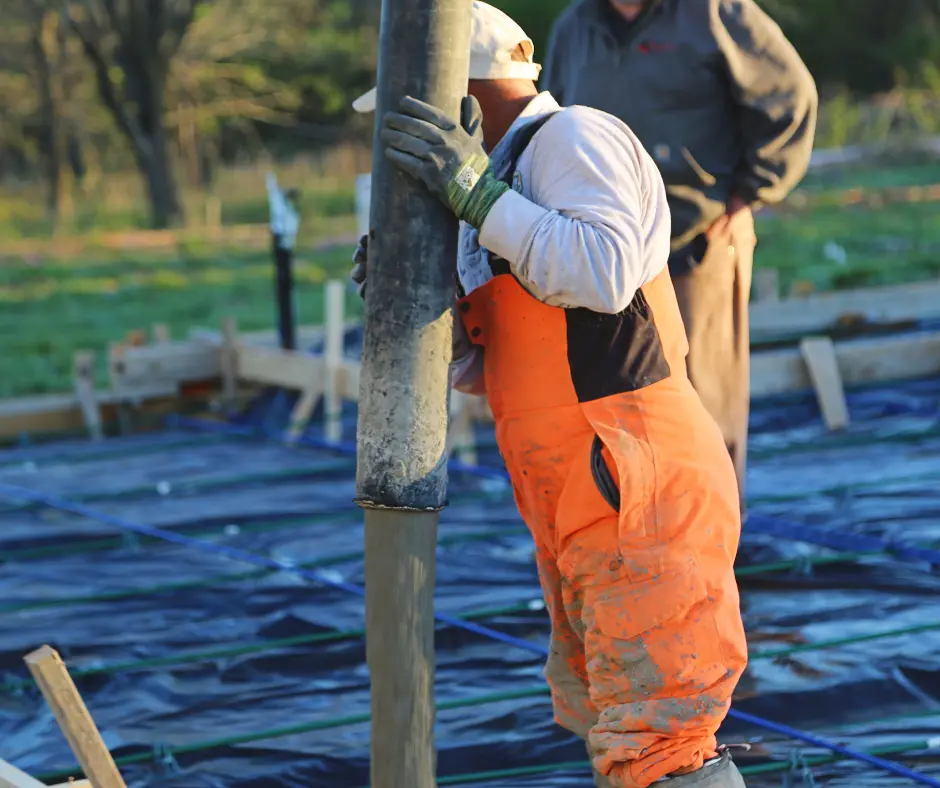
Curious what post-tensioning actually looks like on a job site? See our step-by-step breakdown of how a post-tension foundation is installed.
How to Determine If Post-Tension Is Right for Your Project
Deciding whether post-tensioning is suitable for your project hinges on several factors.
Firstly, consider the scale and scope of your build; post-tensioning might offer more benefits for projects requiring large spans or where the soil condition demands a more robust foundation.
Consulting with engineering professionals who can assess the geological conditions and load requirements of your project is crucial.
Additionally, the long-term savings in maintenance and repair costs can make post-tension foundations a wise investment for future-proofing your structure.
Post-Tension vs. Rebar Foundation: Which Is Right for You?
If you’re weighing foundation types, the real decision usually comes down to post-tension cables versus traditional rebar. Rebar-reinforced slabs rely on steel bars embedded in the concrete to resist cracking, and they’re a proven, lower-upfront-cost option for smaller builds on stable soil.
Post-tension foundations use steel tendons that are tensioned after the pour, actively compressing the slab rather than just reinforcing it passively. That makes post-tension the stronger choice for Oklahoma’s expansive clay soils, larger spans, or any project where long-term settling and cracking are a real concern. Rebar can cost less upfront, but post-tension foundations typically save money over the life of the structure by reducing repair and maintenance needs.
Frequently Asked Questions About Post-Tension Foundations
What is a post-tension foundation?
A post-tension foundation is a concrete slab reinforced with steel tendons that are tightened, or “tensioned,” after the concrete cures. This compresses the slab, allowing it to resist the tension and movement that causes cracking in traditional foundations.
Is a post-tension foundation better than rebar?
For most homes built on Oklahoma’s shifting clay soils, yes. Post-tension foundations handle soil movement and tensile stress better than standard rebar slabs, which is why they’ve become the standard for new residential construction in much of Oklahoma City.
How long does a post-tension foundation last?
A properly engineered and installed post-tension foundation can last 50 years or more with minimal maintenance, provided the tendons are installed and tensioned correctly.
Fill out our contact form to learn more!