
Stem Wall Foundations: What Oklahoma Builders Should Know
When it comes to new construction in Oklahoma, the foundation you choose sets the tone for everything that follows. Stem wall foundations are one of the most reliable and versatile systems available for both residential and commercial builds — and for good reason. They offer structural stability, moisture protection, and long-term durability that holds up against the specific soil and weather conditions Oklahoma is known for throwing at a structure.
At Innovative Concrete Solutions, we’ve been installing stem wall foundations across Oklahoma City and the surrounding region since 2009. Here’s what builders, contractors, and homeowners should understand about how they work, why they perform well in this part of the country, and what the installation process actually involves.
What Are Stem Wall Foundations?
A stem wall foundation consists of a concrete footing poured below grade, with a reinforced concrete wall — the stem wall — rising from that footing up to the finished floor elevation. That wall connects the below-grade footing to the above-grade structure, creating a continuous load path from the building down into stable soil.
Unlike a slab-on-grade, stem wall foundations raise the structure slightly above ground level. That separation matters more than most people realize, especially in Oklahoma where expansive clay soils, moisture fluctuations, and freeze-thaw cycles put constant pressure on anything built directly on the ground. According to the Portland Cement Association, subgrade preparation and foundation type selection are among the most critical factors in long-term concrete slab performance.
Why Stem Wall Foundations Suit Oklahoma Soil Conditions
Oklahoma’s clay-heavy soils are among the most challenging in the country for concrete construction. Clay expands when it absorbs moisture and contracts when it dries — a cycle that repeats with every rain event, every dry stretch, and every seasonal shift. That constant movement puts stress on foundations that aren’t engineered to handle it.
Stem wall foundations are particularly well-suited for these conditions because the footing is placed below the active zone of soil movement, anchoring the structure in more stable ground. The stem wall itself acts as a barrier between that moving soil and the building above it, distributing loads more effectively than a slab sitting directly on unpredictable ground. The Federal Emergency Management Agency’s building science guidelines specifically recommend elevated foundation systems for areas with expansive or flood-prone soils — conditions that describe much of the Oklahoma City metro.
For sites with uneven terrain, sloped lots, or areas where fill soil has been used, stem wall systems also give crews the ability to account for grade changes without compromising structural integrity. That flexibility makes them a go-to choice for a wide range of residential and commercial projects across the region.
Moisture Protection Built Into the Design
One of the most important advantages of stem wall foundations is the separation they create between the structure and ground-level moisture. Oklahoma’s spring storm season brings heavy rainfall, and water that pools around a foundation — or wicks up through soil in direct contact with a slab — is one of the leading causes of long-term foundation damage.
By elevating the building above grade, stem wall foundations reduce the risk of moisture infiltration into the base of the structure. When combined with proper site grading, drainage planning, and vapor barriers, they create a system that actively manages water rather than just hoping it stays away.
At ICS, moisture management starts at the site assessment stage, not after the pour. Every stem wall project we take on includes drainage planning specific to that site and those soil conditions — because what works in one part of Oklahoma City doesn’t always translate to the next neighborhood over. You can learn more about how we approach that process in our post on how drainage and soil conditions affect concrete foundations.
Structural Strength and Load Distribution
Stem wall foundations don’t just protect against moisture and soil movement — they’re engineered for strength. The reinforced concrete footing spreads the building’s load across a wide area of soil, reducing the concentrated pressure at any single point. The stem wall then transfers that load vertically, creating a continuous structural connection from the slab or floor system down to stable ground.
Rebar placement is critical to this performance. Horizontal reinforcement ties the footing together, while vertical bars connect the footing to the stem wall, creating a monolithic system that resists cracking and separation under load. The American Concrete Institute identifies proper reinforcement detailing as one of the primary factors in foundation durability. At ICS, we never cut corners on reinforcement layout — it’s one of those details that’s invisible once the concrete is placed, but it determines how the foundation performs for the next 50 years.
The Stem Wall Foundation Installation Process
Installing stem wall foundations requires precise sequencing and attention to detail at every phase. Here’s how ICS approaches the process on a typical project.
Site Preparation and Excavation
Before any concrete is placed, the site is cleared, graded, and excavated to the correct depth. Footings need to be placed below the frost line and into stable, well-compacted soil. In Oklahoma City, that means evaluating the native soil at each site — clay composition, bearing capacity, and moisture content all factor into how the excavation is approached and how the base is prepared.
Footing Installation
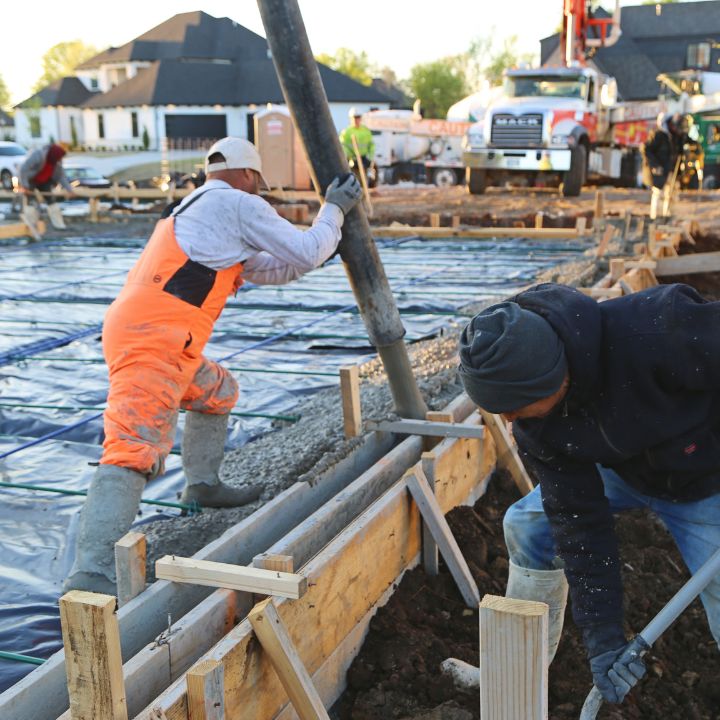
The continuous footing is formed, reinforced with rebar, and poured first. Footings must be level and properly dimensioned for the structural loads they’ll carry. The concrete is allowed to reach sufficient strength before stem wall construction begins.
Stem Wall Construction
Once the footing has cured, the stem wall is formed and poured. Vertical rebar ties the wall to the footing below and provides connection points for above-grade framing or block. Wall height is determined by the building design and finished floor elevation requirements.
Slab or Floor System Installation
Depending on the project, a concrete slab is poured within the stem wall perimeter, or a floor framing system is installed over a crawl space. For slab installations, a compacted gravel base and vapor barrier are placed before the pour to manage moisture migration.
Backfill and Drainage Finishing
The area around the foundation is backfilled and graded to direct surface water away from the structure. Proper grading at this stage is just as important as anything done during the pour — poor drainage is a primary cause of long-term foundation problems, and it’s something we take seriously on every job.
Built to Last in Oklahoma
Stem wall foundations, when installed correctly, are built for the long haul. They handle Oklahoma’s soil movement, moisture swings, and temperature extremes better than many alternative systems — and they do it by addressing those conditions structurally, not just cosmetically.
At Innovative Concrete Solutions, we bring the same standard of craftsmanship to every stem wall project we take on, whether it’s a custom home foundation in the Oklahoma City metro or a commercial new construction build across the state. If you’re ready to get started, learn more about our footing and stem wall foundation services or reach out to our team directly.
Contact Innovative Concrete Solutions today at (405) 471-6067 or get in touch through our contact page. Let’s build something that stands the test of time.
Author: Steven Smith