
Pier and Grade Beam Foundations: What Builders Need to Know
Not every building site is created equal. Some lots have surface soils that simply can’t support the structural loads a building places on them — soils too soft, too unstable, or too prone to movement to serve as a reliable bearing layer for a conventional foundation. For those sites, pier and grade beam foundations are the engineered solution that bridges the gap between challenging surface conditions and the stable soil or bedrock that lies deeper below.
At Innovative Concrete Solutions, we install pier and grade beam foundations for residential and commercial new construction across Oklahoma City and the surrounding region. Here’s a thorough look at how this foundation system works, when it’s the right choice, and what the installation process actually involves.
What Are Pier and Grade Beam Foundations?
A pier and grade beam foundation is a two-component system. The piers are deep, cylindrical concrete columns that extend through the unstable surface soil down to a stable bearing layer — either competent native soil at depth or bedrock. The grade beam is a reinforced horizontal concrete beam that spans between the piers at or near grade level, tying them together and distributing the structural load of the building evenly across the pier system.
The two components work together to solve a problem that neither could solve alone. The piers provide the deep bearing capacity that the surface soil can’t offer. The grade beam transfers the building’s load from the walls and framing above into the piers below, ensuring that load is spread evenly rather than concentrated at isolated points.
According to the American Concrete Institute, deep foundation systems like pier and grade beam construction are specifically engineered for conditions where surface or near-surface soils have insufficient bearing capacity for the anticipated structural loads — a situation that applies to a meaningful portion of Oklahoma City’s construction sites given the region’s variable soil conditions.
When Pier and Grade Beam Foundations Are the Right Choice
Understanding when to specify pier and grade beam foundations — versus a post-tension slab, stem wall system, or other foundation type — is one of the more important decisions made during the pre-construction phase of a project.
Unstable or low-bearing-capacity surface soils. When site investigation reveals surface soils that can’t reliably support the structural loads of the building, deep foundations that bypass those soils entirely are the appropriate solution. This is the primary driver for pier and grade beam specification.
Highly expansive clay conditions. Oklahoma City’s native clay soils are highly plastic — they expand and contract significantly with moisture changes. In some cases, the degree of shrink-swell movement in the upper soil layers is severe enough that even post-tension foundations, which perform well on expansive soils, aren’t the optimal choice. Piers that extend through the active zone into stable soil below eliminate the influence of that surface clay movement on the foundation.
Sloped or irregular terrain. On steeply sloped lots or sites with significant grade variation, pier and grade beam systems offer a practical advantage. The piers can be drilled to consistent bearing depth regardless of surface topography, and the grade beam ties them together at a consistent elevation. This avoids the extensive cut-and-fill earthwork that other foundation types might require on the same site.
Areas with fill soil. Sites where fill has been placed — either as part of grading for a development or as historic fill from previous site use — often have unpredictable bearing capacity in the filled zone. Piers drilled through the fill into native soil below provide a reliable bearing layer that the fill itself cannot.
How Pier and Grade Beam Foundations Are Installed
The installation sequence for pier and grade beam foundations follows a precise order. Each phase depends on the preceding one being completed correctly.
Site Layout and Engineering Review
Before any drilling begins, the pier layout is established based on the structural engineer’s design drawings. Pier locations, depths, diameters, and spacing are all specified by the engineer based on the soil investigation, the building’s structural loads, and the depth to adequate bearing material. Deviating from the engineer’s layout — moving piers for convenience, reducing depths to save time — compromises the entire system.
Pier Drilling
Piers are drilled using a rotary drill rig to the specified depth and diameter. In Oklahoma City, that depth depends on where stable soil is encountered — it varies by site based on the local geology and the specific soil conditions present. Each pier hole is inspected before concrete placement to verify that the bearing material at the bottom meets the engineer’s requirements.
Rebar Cage Placement and Concrete Filling
A reinforcing steel cage — sized and detailed to the engineer’s specifications — is lowered into each drilled hole before concrete is placed. The rebar cage provides the tensile strength the concrete column needs to handle the loads it will carry and to connect properly to the grade beam above. Concrete is then placed in the pier hole, typically through a tremie pipe to ensure it fills the hole completely without voids.
The Portland Cement Association emphasizes that proper concrete placement in drilled pier construction is critical — incomplete filling or contamination of the concrete during placement creates weak points that can compromise the pier’s load-carrying capacity.
Grade Beam Forming and Reinforcement
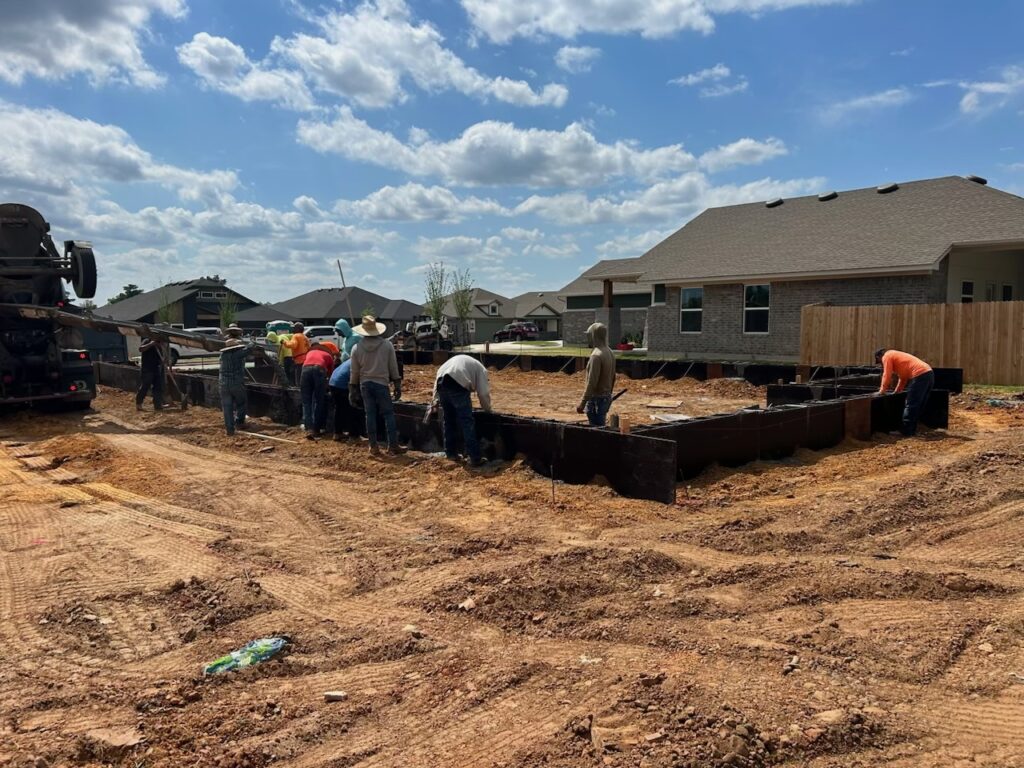
Once the piers have reached adequate strength, the grade beam is formed between them. The grade beam ties the piers together into a unified structural system, and its reinforcement is designed to handle both the spanning loads between piers and the connection forces at each pier location. Vertical rebar extending from the pier into the grade beam creates the structural continuity between the two components.
Grade Beam Concrete Placement
The grade beam is poured and finished to the specified elevation. Proper curing of the grade beam concrete is essential — Oklahoma’s summer heat and persistent wind can accelerate surface drying and cause plastic shrinkage cracking if curing measures aren’t in place immediately after placement. At ICS, we manage curing on grade beam work the same way we manage it on any concrete pour in Oklahoma conditions: with the specific weather conditions that day in mind.
Backfill and Site Preparation
After the grade beam has reached design strength, the area around the foundation is backfilled and graded. Drainage away from the foundation is established at this stage — a detail that matters for long-term performance regardless of foundation type.
Pier and Grade Beam Foundations in Oklahoma’s Soil Conditions
Oklahoma’s geology creates a range of soil conditions across the metro that make pier and grade beam foundations a relevant option on more sites than builders sometimes expect. The highly plastic Garvin and Port series clays common across central Oklahoma can have active zones extending 10 to 15 feet below grade in some areas — deeper than post-tension systems are designed to address.
The Federal Highway Administration’s geotechnical engineering resources document the specific challenges that highly plastic clays present for foundation design, noting that deep foundation systems are often the appropriate solution when the active zone of soil movement extends beyond what surface foundation systems can manage. In those conditions, piers that reach competent material below the active zone provide a stable, consistent bearing layer that surface conditions can’t disrupt.
For builders and developers working across the OKC metro, site-specific soil investigation before foundation selection is essential. What works on one lot in a given area may not be appropriate on the lot next door if fill conditions, soil composition, or depth to stable bearing material differ. ICS works closely with structural engineers and geotechnical consultants to ensure the foundation system specified for each project reflects the actual conditions on that site.
Partnering With ICS for Pier and Grade Beam Foundation Work
Pier and grade beam foundation installation requires experienced crews, proper equipment, and careful attention to the engineering requirements at every phase. The deep drilling, cage placement, and concrete sequencing involved leave less room for improvisation than some other foundation types — the work either meets the spec or it doesn’t.
At ICS, we approach pier and grade beam work with the same standard of craftsmanship we bring to every foundation system we install. To understand how pier and grade beam systems fit alongside the other foundation options we offer, visit our footing, stem wall, pier and grade beam foundations service page.
If you’re planning a project where pier and grade beam foundations may be the right solution, contact Innovative Concrete Solutions at (405) 471-6067 or reach out online. We’ll help you build it right from the ground up.
Author: Steven Smith