
Custom Concrete Driveways and Walkways in Oklahoma City
There’s a significant difference between concrete that’s simply functional and concrete that’s built with intention. Custom concrete driveways and walkways don’t just hold up under daily use — they define the first impression your property makes, add long-term value, and reflect the quality of the craftsmanship behind them. In Oklahoma City, where clay soils, temperature swings, and heavy spring rains put constant pressure on outdoor surfaces, that quality gap matters more than most homeowners realize until they’re dealing with cracking, settling, or premature deterioration.
At Innovative Concrete Solutions, we’ve been designing and installing custom concrete driveways and walkways across the Oklahoma City metro since 2009. Here’s a look at what that work actually involves — the decisions, the details, and the results that separate a custom concrete project done right from one that just gets the job done.
What Makes a Concrete Driveway or Walkway “Custom”?
Custom concrete work isn’t just about aesthetics, though the visual results speak for themselves. It’s about engineering the project to the specific demands of that site — the soil conditions, the drainage pattern, the load requirements, the grade, and how the new concrete needs to integrate with existing structures or landscaping.
On a custom driveway project in Oklahoma City, that means evaluating the native clay soil and designing the base preparation accordingly. Oklahoma’s expansive clay is one of the most challenging substrates for concrete flatwork in the country. It expands significantly when wet and contracts when dry, and a driveway poured directly onto an improperly prepared clay base will crack and settle within a few years regardless of how good the concrete itself is. The Portland Cement Association identifies subgrade preparation as the single most critical factor in concrete flatwork durability — a detail that separates experienced crews from those who just show up and pour.
On a custom walkway project, it means thinking through how the path connects spaces, how it handles grade transitions, how wide it needs to be for comfortable use, and how the edges integrate cleanly with surrounding landscaping or turf. These aren’t afterthoughts — they’re decisions that get made before the forms go in.
Custom Concrete Driveways: Built for Oklahoma Conditions
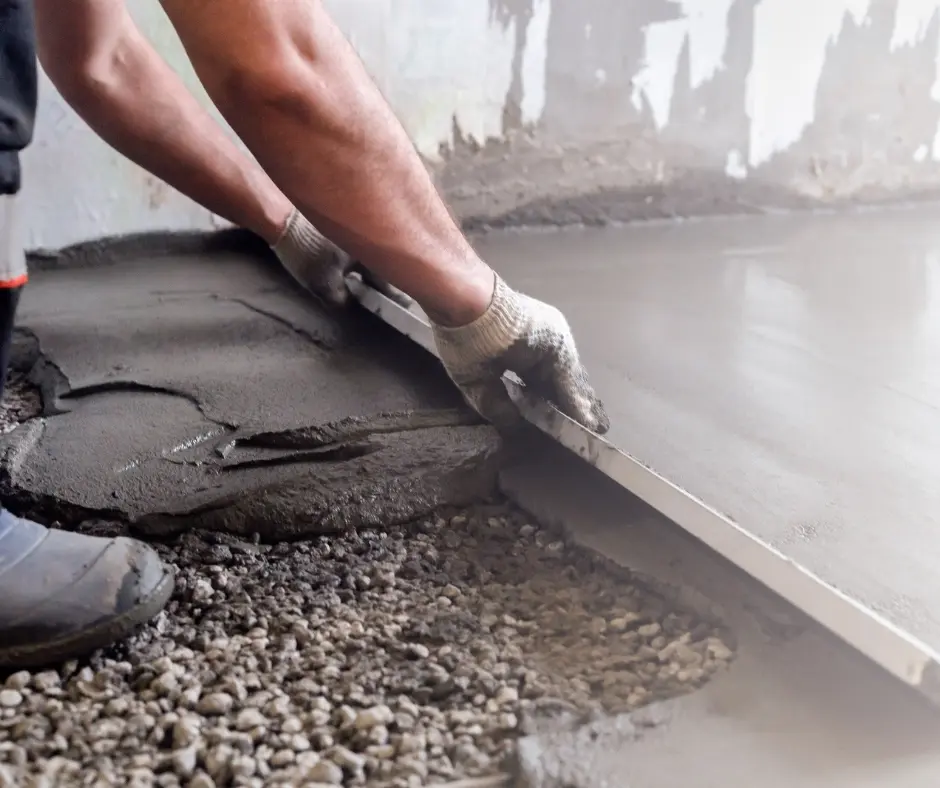
A well-built concrete driveway in Oklahoma City starts well below the surface. Proper base preparation — removing unstable material, compacting the subgrade, and installing a gravel base that promotes drainage — is what separates a driveway that lasts 30 years from one that’s cracking by year five.
Concrete thickness and reinforcement are the next critical decisions. Residential driveways typically call for a minimum of four inches of concrete, but on sites with heavy vehicle traffic, soft subsoils, or access for large trucks, five or six inches is the right call. Rebar or wire mesh reinforcement is placed within the slab to control cracking and hold the concrete together if the subgrade shifts beneath it — which in Oklahoma clay, it eventually will.
Control joints are another detail that separates quality work from shortcuts. Properly placed and cut control joints give the concrete a predetermined place to crack — along the joint, invisibly — rather than randomly across the surface. On a standard two-car driveway, that means joints every 8 to 10 feet, cut to the right depth within the first 24 hours after the pour. Miss that window or space them incorrectly, and you lose most of the crack control benefit.
The finish is where the custom element becomes visible. ICS installs driveways with a range of surface finishes — from a clean broom finish that provides traction and a classic look, to exposed aggregate finishes that add texture and visual depth, to smooth troweled surfaces for a more refined appearance. The right finish depends on the home’s architecture, the surrounding landscape, and how the driveway will be used. According to the American Concrete Institute, surface finishing technique directly affects long-term durability and resistance to Oklahoma’s freeze-thaw cycles — so it’s a functional decision as much as an aesthetic one.
Custom Concrete Walkways: Connecting Spaces the Right Way
A concrete walkway is more than a path from point A to point B. When it’s designed and installed thoughtfully, it becomes a defining feature of the property — one that guides movement naturally, manages transitions in grade smoothly, and holds up to foot traffic and Oklahoma weather without becoming a maintenance problem.
Custom walkway work at ICS begins with the layout. Width, curve, connection points, and how the walkway integrates with the driveway, entry, or landscaping are all mapped out before any ground is broken. For walkways that need to tie into existing concrete — at a home entry, along a garage apron, or connecting to a back patio — proper bonding and transition detailing are critical. A poorly executed tie-in creates a visible seam and a weak point where moisture infiltration and cracking will eventually follow.
Grade management is another area where custom work pays off. Oklahoma lots are rarely perfectly flat, and a walkway that doesn’t properly account for slope can become a drainage problem, directing water toward the foundation or creating low spots that pool after rain. ICS designs every walkway with positive drainage in mind — water moves away from structures, not toward them.
Finish options for walkways follow the same logic as driveways. Broom finishes provide slip resistance, which matters especially on approaches to entries and steps. Exposed aggregate adds texture and visual interest. For walkways that border landscaping or garden areas, a clean edge detail makes the transition between hardscape and softscape look intentional rather than afterthought. For more on how we approach residential flatwork, visit our residential driveways and walkways service page.
The ICS Approach to Custom Concrete Projects in Oklahoma City
Every custom concrete driveway or walkway ICS installs goes through the same process: site assessment, base preparation, proper mix design for Oklahoma conditions, precise forming and reinforcement, and a finish that matches the project intent. We don’t cut corners on base prep because it’s underground and nobody will see it. We don’t skip control joints because they add time to the job. These details exist because they’re what make concrete last.
Oklahoma City’s soil and climate are demanding. A concrete project that isn’t designed for those conditions will show it within a few years — in cracks, in settling, in surface deterioration from freeze-thaw cycles. One that is designed for them will still be performing decades later. That’s the difference between a contractor who pours concrete and one who builds it right.
The Federal Highway Administration’s concrete pavement resources reinforce that proper design, base preparation, and curing procedures are the foundation of long-lasting concrete flatwork — whether it’s a highway or a residential driveway. The principles are the same; the scale is different.
Ready to Start Your Custom Concrete Project in Oklahoma City?
If you’re planning a new driveway, a walkway, or any residential concrete flatwork in the Oklahoma City area, ICS is ready to help. We’ll assess your site, talk through your options, and deliver work that’s built to last in Oklahoma conditions. To see more examples of how we approach residential work, take a look at our post on what Oklahoma builders should know about concrete foundations.
Call Innovative Concrete Solutions at (405) 471-6067 or contact us online to get started. Let’s build something that stands the test of time.
Author: Steven Smith