
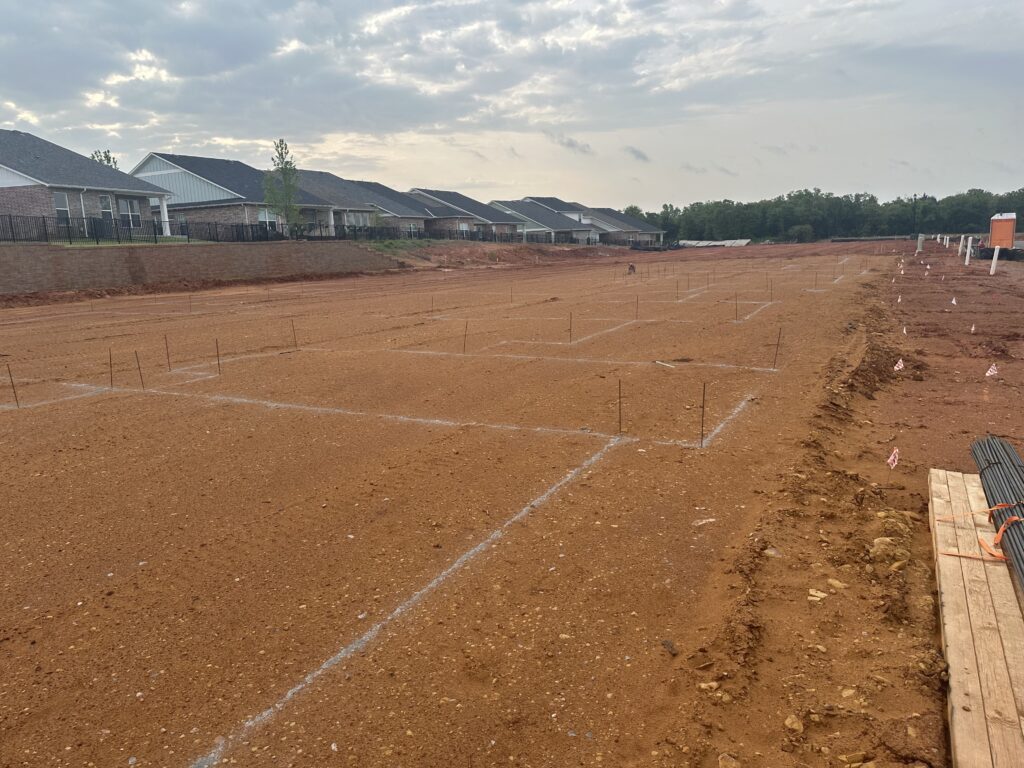
What is a Footing and Stem Wall Foundation?
If you’re building a home or commercial structure in Oklahoma, the foundation system you choose will affect everything — how the building performs over time, how it handles soil movement, and how well it stands up to the weather cycles this state is known for. A footing and stem wall foundation is one of the most reliable systems available, and it’s particularly well-suited to Oklahoma’s challenging soil and climate conditions. Understanding how it works and why it performs the way it does helps builders and homeowners make confident decisions before the first shovel hits the ground.
At Innovative Concrete Solutions, we’ve been installing footing and stem wall foundations across Oklahoma City and the surrounding region since 2009. Here’s a thorough breakdown of what this foundation system is, how it’s built, and why it outperforms other options in many Oklahoma construction scenarios.
What is a Footing and Stem Wall Foundation?
A footing and stem wall foundation is a two-part system. The footing is a wide, flat concrete base poured below grade — below the frost line — that spreads the structural load of the building across a broad area of soil. The stem wall is a reinforced concrete wall that rises vertically from the footing up to finished floor elevation, connecting the below-ground footing to the above-ground structure.
Together, the footing and stem wall create a continuous load path from the building down into stable soil. The footing handles load distribution. The stem wall handles the transition between below-grade and above-grade, providing lateral support and elevating the structure above ground level. Reinforcing steel — rebar — ties the two components together into a unified, monolithic system that resists both vertical settlement and lateral movement.
According to the Portland Cement Association, properly designed and reinforced concrete foundations are the single most important factor in a building’s long-term structural performance — and the footing and stem wall system is among the most proven designs in use today.
How Footing and Stem Wall Foundations Are Built
The installation process follows a precise sequence. Skipping steps or rushing any phase creates problems that are expensive — and sometimes impossible — to fix after the fact.
Site Preparation and Excavation
The site is cleared, graded, and excavated to the required footing depth. In Oklahoma City, that means accounting for the frost line as well as the bearing capacity of the native soil. Oklahoma’s clay-heavy soils require careful assessment — clay composition and moisture content affect how the base is prepared and how the footing is sized. A well-prepared subgrade is the foundation of the foundation.
Footing Placement
The continuous footing is formed, reinforced with horizontal rebar, and poured first. Footings must be level, properly dimensioned for the structural loads they’ll carry, and allowed to reach sufficient compressive strength before stem wall construction begins. Cutting corners at this stage — undersizing the footing or pouring on an inadequately compacted base — creates settlement issues that show up years later as cracks, unlevel floors, and door frames that won’t close.
Stem Wall Construction
Once the footing has cured, the stem wall is formed and poured. Vertical rebar connects the stem wall to the footing below, creating the continuous reinforced system that gives this foundation type its strength. Wall height is determined by the building design and finished floor elevation — on sloped lots or sites with significant grade change, stem wall height can vary around the perimeter to keep the structure level.
Slab and Drainage Finishing
A concrete slab is typically poured within the stem wall perimeter on a compacted gravel base with a vapor barrier in place to manage moisture migration. Once the slab is complete, the area around the foundation is backfilled and graded to direct surface water away from the structure. Proper drainage finishing at this stage is just as critical as the pour itself — poor grading is one of the leading causes of long-term foundation problems in Oklahoma.
Footing and Stem Wall vs. Monolithic Slab Foundations
One of the most common questions builders and homeowners ask is how a footing and stem wall foundation compares to a monolithic slab. Both are widely used in Oklahoma, and each has its place — but they perform differently under different conditions.
A monolithic slab is a single continuous pour where the footing and slab are cast together at the same time. It’s faster and generally less expensive to install. For flat lots with stable, well-draining soil, it can be an appropriate choice.
A footing and stem wall foundation, by contrast, is a two-stage system. It takes more time and more material, but it delivers meaningful advantages in the right conditions. The American Concrete Institute notes that stem wall systems are particularly effective in areas with expansive soils, sloped terrain, or elevated moisture exposure — all of which describe large portions of the Oklahoma City metro.
Here’s how the two systems compare across the conditions that matter most in Oklahoma:
Expansive clay soils: Oklahoma’s clay-heavy soils expand when wet and contract when dry. That constant movement puts stress on any foundation sitting directly on or near the active soil zone. A footing and stem wall foundation places the footing below that active zone, anchoring the structure in more stable ground. A monolithic slab sits entirely within it.
Sloped or uneven lots: On a sloped site, a monolithic slab requires significant cut-and-fill work to create a level building pad, which can introduce fill soil instability. A stem wall system can be built to varying heights around the perimeter to follow the natural grade, without relying on fill to create a level surface.
Moisture and flood exposure: The stem wall elevates the structure above ground level, creating separation between the building and surface moisture. In areas of Oklahoma City prone to heavy runoff or where the finished floor elevation needs to clear base flood elevation, this elevation is a significant structural advantage.
Speed and cost: Monolithic slabs win here. The single-pour process is faster and typically less expensive. For projects where soil conditions are favorable and budget is the primary constraint, it can be the right call.
For most Oklahoma residential new construction on native clay soils, a footing and stem wall foundation delivers better long-term performance. The additional upfront investment in the two-stage system pays for itself in stability and durability over the life of the structure.
Why Footing and Stem Wall Foundations Perform Well in Oklahoma
Oklahoma’s combination of clay-heavy soils, significant rainfall, and temperature extremes makes it one of the more demanding environments for residential foundations in the country. The footing and stem wall system addresses those challenges directly.
The footing is placed below the frost line and below the zone of active soil movement, giving the structure a stable anchor that isn’t subject to the seasonal shrink-swell cycle Oklahoma clay is known for. The stem wall creates a moisture barrier between ground-level soil and the base of the structure. And the reinforced concrete throughout the system — from footing to stem wall to slab — is engineered to handle the loads and lateral forces that Oklahoma soil and weather generate over decades.
The Federal Emergency Management Agency’s building science resources specifically identify elevated foundation systems as the preferred approach in areas with expansive soils and flood risk — conditions that apply to significant portions of the OKC metro and surrounding communities.
When ICS installs a footing and stem wall foundation, we’re not just following a spec sheet. We’re applying 15-plus years of experience working in Oklahoma soil conditions to make sure every component of that system — the footing depth, the rebar layout, the stem wall height, the drainage plan — is right for that specific site.
Is a Footing and Stem Wall Foundation Right for Your Project?
If you’re building on a sloped lot, on native Oklahoma clay soil, in an area with moisture exposure, or simply want the most durable foundation option available, a footing and stem wall system is worth a serious look. It’s a proven system that’s been the foundation of choice for quality residential and commercial construction in Oklahoma for decades.
To learn more about how ICS approaches foundation work, visit our footing and stem wall foundation services page or read our in-depth guide on what Oklahoma builders should know about stem wall foundations.
Ready to talk through your project? Contact Innovative Concrete Solutions at (405) 471-6067 or reach out online. We’ll help you build it right from the ground up.
Author: Steven Smith